

Cognitive Science and the Law
Expert Witness | CLE | Training | Consulting | Speaking
Working with attorneys, judges, neutrals, and legal organizations to apply cognitive science to the law.
— Better legal outcomes begin with a better understanding of the mind.
Scientific Insight for Legal Questions

The law makes assumptions about the human mind — how people judge evidence, reason about probabilities, remember events, interpret language, assess responsibility, and make decisions under uncertainty. These assumptions shape legal reasoning and outcomes, yet they are rarely examined systematically.
Cognitive science studies these processes empirically. Drawing on decades of research across psychology, linguistics, philosophy, behavioral economics, and cognitive neuroscience, it provides a scientific account of how judgment, memory, reasoning, and decision-making actually work.
Condorcet Insight LLC applies this scientific understanding of the mind to legal practice, bringing greater precision, analytical discipline, and client value to legal decision-making and outcomes.
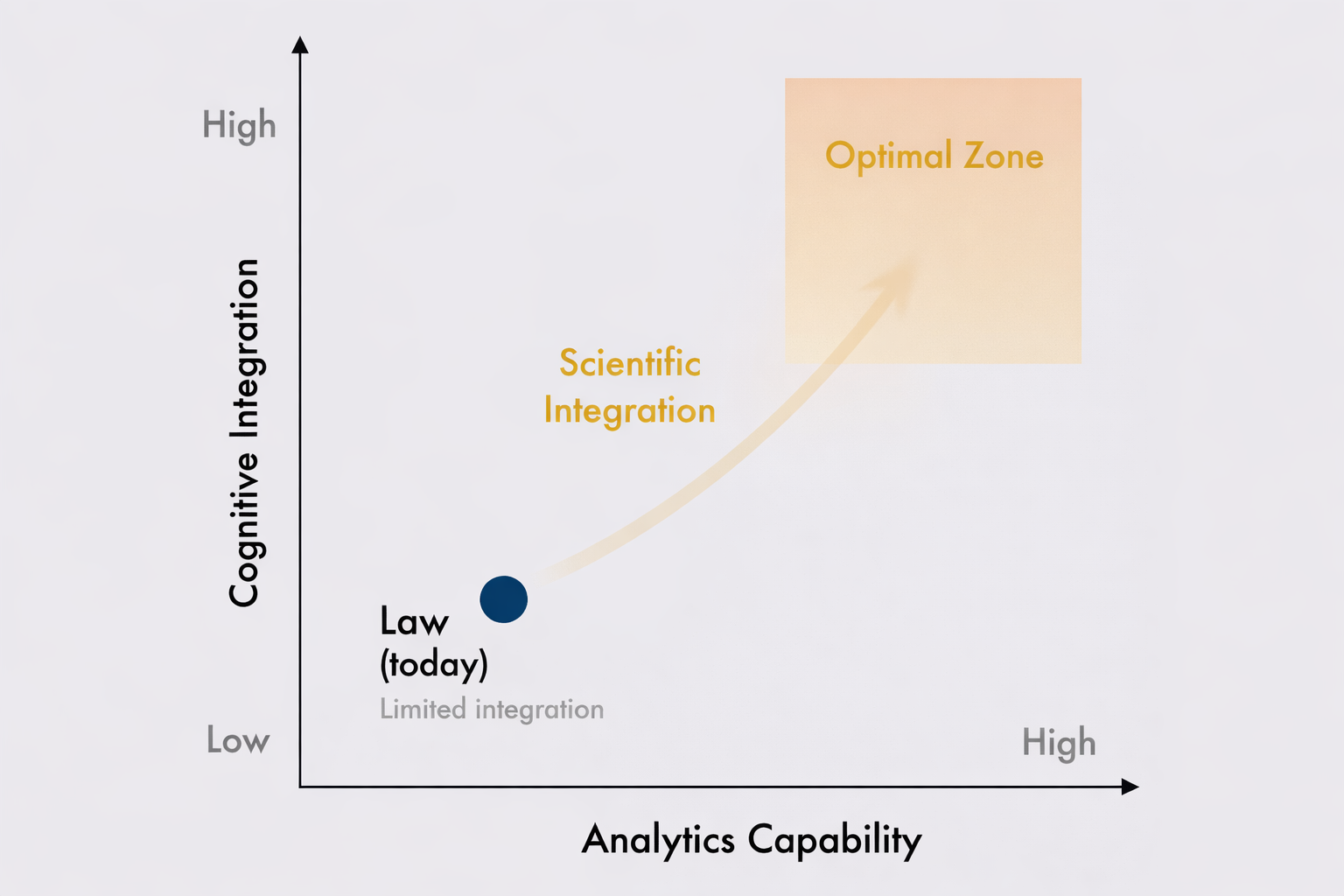
Why the Law Needs Cognitive Science
Over the last fifty years, advances in cognitive science and data analytics have reshaped the way we make decisions and solve complex problems.
Industries that have embraced these developments have become more reliable, safer, more efficient — and more profitable.
While the law has made important progress, it continues to lag behind other fields in the systematic adoption of behavioral science and data analytics.
Condorcet Insight LLC helps bridge this gap by integrating scientifically grounded tools into legal practice — supporting more rigorous evaluation of evidence, responsibility, and decision-making across legal contexts.

Applications to legal practice
-
Evidentiary evaluation and inference
Non-economic damages and dignitary harm
Responsibility and attribution
Decision-making under uncertainty
-
Culpability and mental state
Reliability of testimony and memory
Interpretation of intent
Responsibility and agency